
Case study
Clatterforge
Coding agents, on a short and well-documented leash. Local-first orchestration, isolated worktrees, and independent verification.
What it is
Coding agents are fast and confidently wrong often enough that you want a record of what they did, under what instructions, and whether anything independent checked it. Clatterforge (CF // SYSTEMS) doesn’t try to make agents smarter—it makes their work accountable.
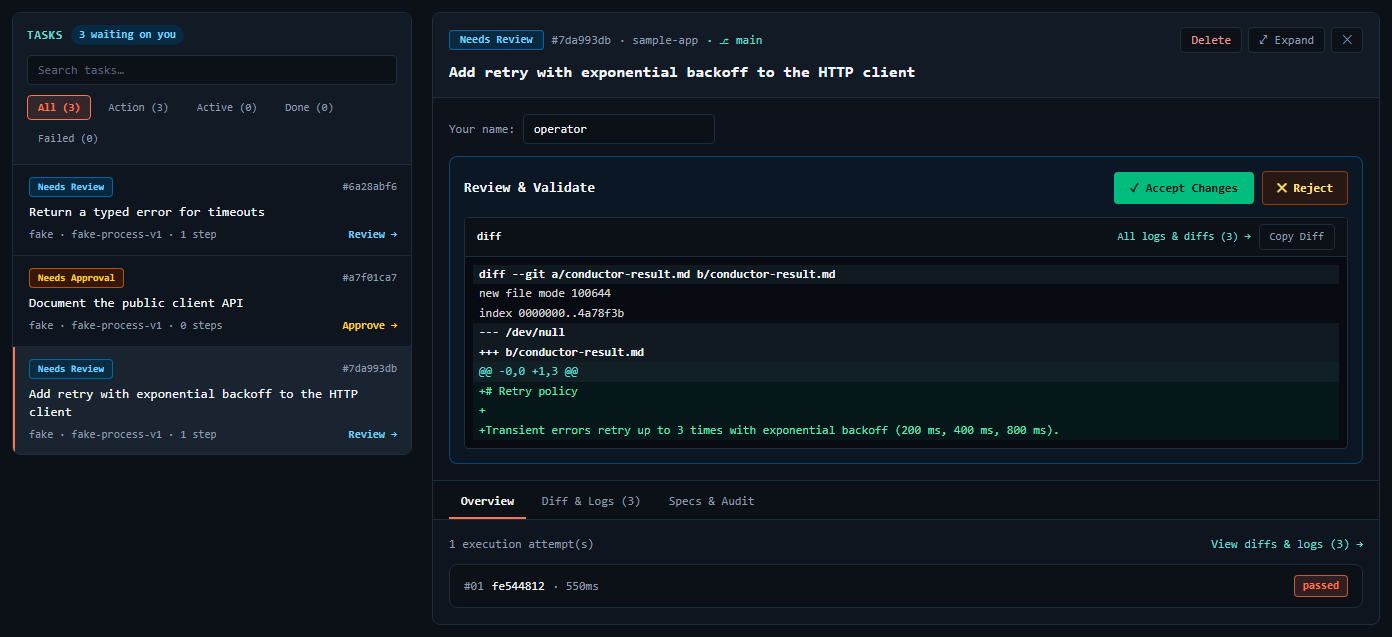
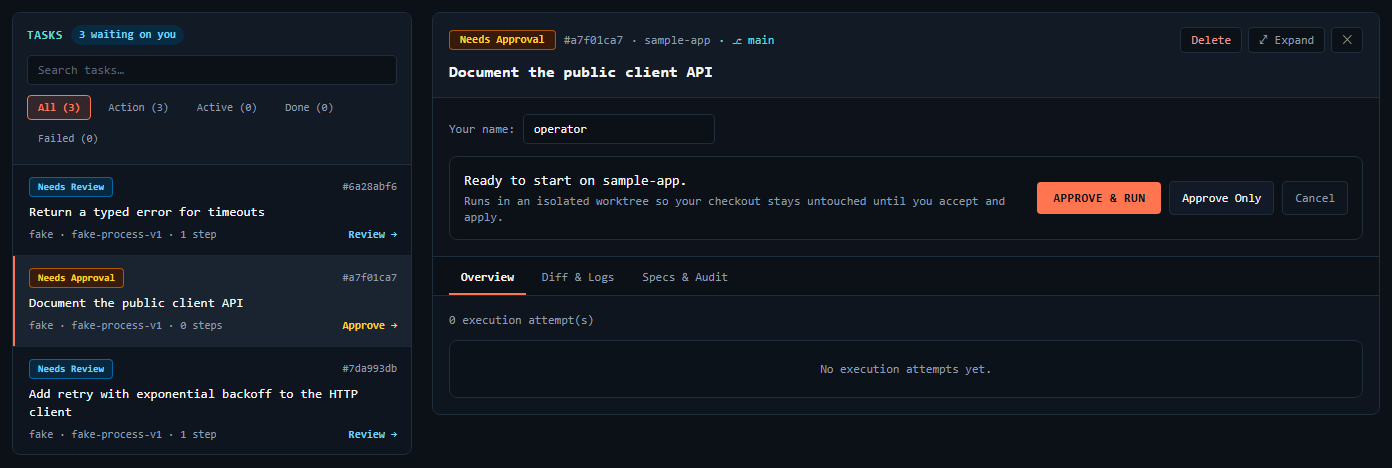
You approve the scope. Supported coding CLIs (like Cursor or Codex) work in an isolated Git worktree, routed by a built-in zero-footprint router or optional local-model planning via Ollama. Recognized tests and verifier metadata stay protected by default. You review the diff, independent test results, and specialist review coverage, accept the result, and explicitly apply it to your project when you are ready.
It is open source under Apache-2.0 and ships installers for Windows, macOS, and Linux from GitHub Releases.
Why it exists
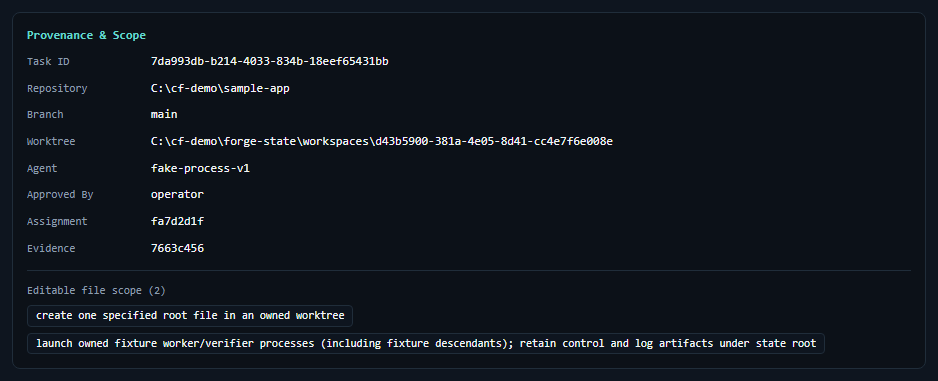
- Approval binds to an exact assignment: File scope, worker preset, verifier, and budget limits are approved together and tied to the base Git revision. Change anything and it requires a fresh approval.
- Supervised execution in isolated worktrees: Workers run as owned process trees with timeouts, cancellation, and a global emergency stop. Crashes or ambiguous exits stay marked with their flight-recorder evidence—never silently rerun.
- Protected tests & independent verification: Tracked acceptance tests are protected from worker edits by default. A separate verifier gate decides pass or fail; what an agent claims about its own work is recorded, never trusted as proof.
- Explicit integration: Accepted changes never auto-merge into your working checkout. You apply them as unstaged edits with recovery receipts, or deliver them on a branch.
A look inside
How it works
The desktop GUI, an authenticated HTTP API, and an MCP server all drive the same task lifecycle. Linux edge workers (“Sparks”) can connect to a primary forge, which alone holds state and policy. Optional verifier sandboxes run checks inside pinned Docker images or Windows AppContainers.
Stack
Rust workspace (core supervisor, protocol, Linux edge client, and Dioxus web/desktop UI wrapped in Tauri v2), bundled SQLite for state and flight-recorder receipts, and signed self-updating installers across Windows, macOS (signed & notarized), and Linux.
Visit Clatterforge site →
View on GitHub →