
Blog
From Squirrels to Supervisors: What I've Been Building Lately
If this blog has been quiet since May, there is a simple reason: when I get deep into a build cycle, writing about the work loses to doing the work.
Over the past six months, that build cycle turned into four new projects—spanning coding-agent orchestration, a Godot economy simulation disguised as a cozy squirrel game, a terminal messaging inbox, and an on-device Android recorder—alongside major milestones on MyAllyFile, Domi Ops, and Aetherbound.
Here is the honest field report on what just went up on the site and why each of these exists.
1. Clatterforge (CF // SYSTEMS): Coding Agents on a Short Leash
Last year I wrote about giving AI assistants a Prime Directive so they stop acting like confident idiots in chat. That solved the single-turn prompt problem. It did not solve what happens when you hand autonomous CLI agents a repository and tell them to execute a multi-step task.
Left unsupervised, coding agents are brilliant and terrible coworkers. They wander outside file scope, rewrite tests to make their own broken code pass, and report victory when the build is quietly on fire.
So I built Clatterforge.
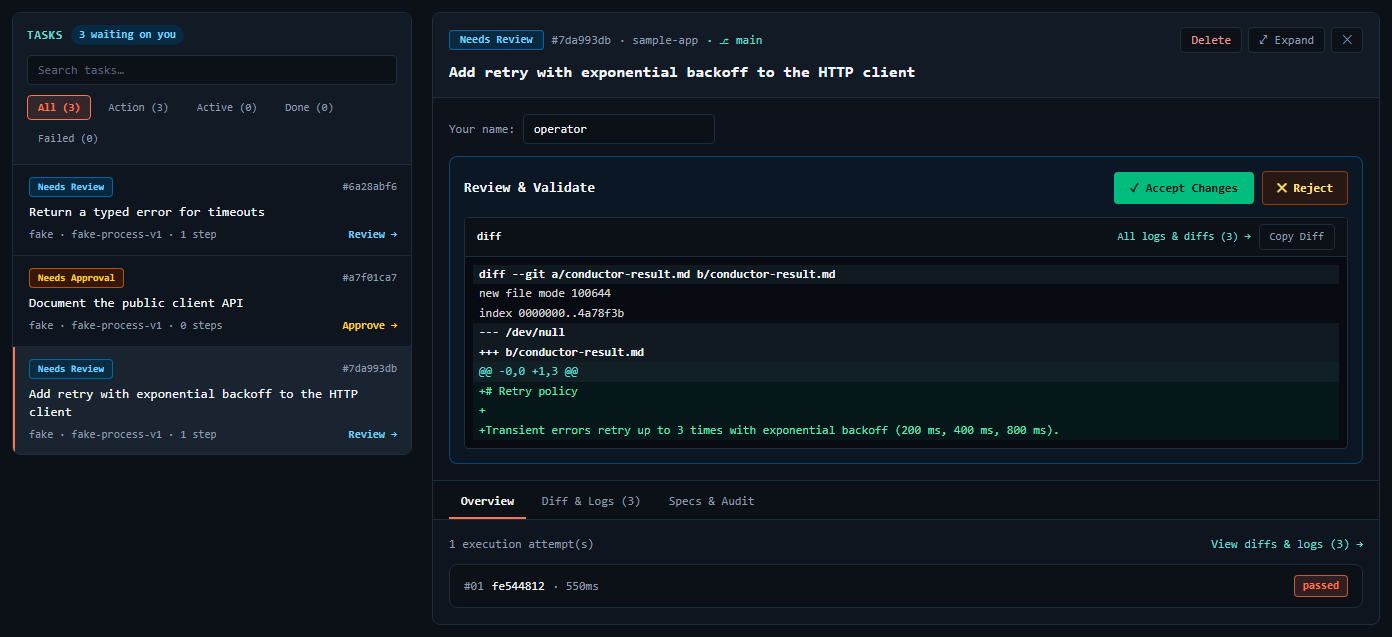
“We’re not making agents smarter. We’re making their work accountable.”
Clatterforge is a local-first supervisor and orchestration forge for coding agents (written in Rust with a native Tauri/Dioxus desktop UI, HTTP API, and MCP server):
- Approval binds to an exact assignment: You approve the file scope, worker preset (Cursor, Codex, or local models), verifier command, and limits against an exact base Git commit.
- Isolated Git worktrees: Workers run as supervised process trees inside isolated worktrees—never directly in your main working copy.
- Protected tests & independent verification: Tracked acceptance tests are protected from worker edits by default. A separate verifier gate decides pass or fail, not the agent’s self-report.
- Explicit integration: Nothing auto-merges. You inspect the flight-recorder evidence and diff, accept the candidate, and explicitly apply it to your checkout when ready.
Clatterforge is open source under Apache-2.0, with installers for Windows, macOS, and Linux live on GitHub.
2. Acornomics: Cute Squirrels, Ruthless Economy
On the opposite end of the visual spectrum—and the exact same end of the deterministic-systems spectrum—we added a dedicated /games section to the site, anchored by Acornomics alongside Aetherbound.
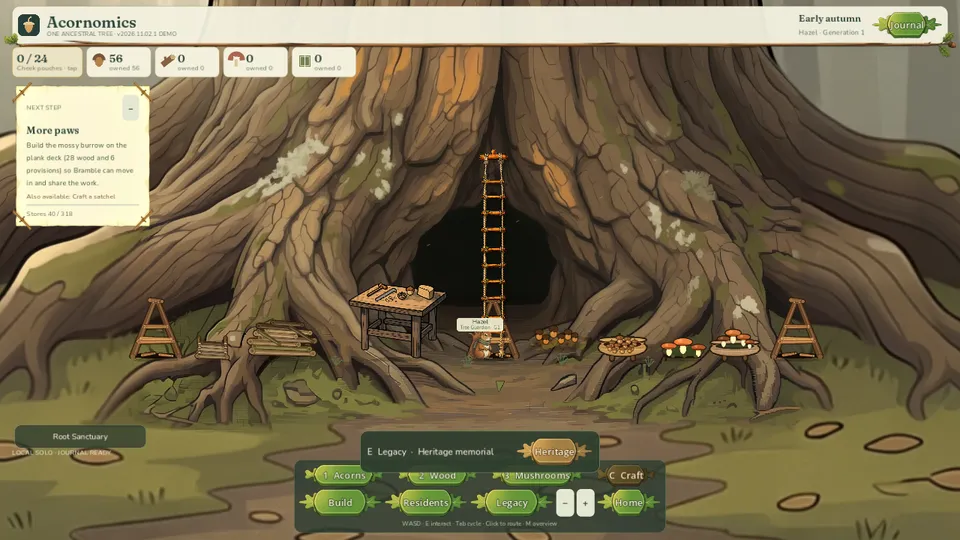
Acornomics looks like a cozy storybook game about squirrels in an ancestral oak. Underneath, it is an uncompromising economy sim built in Godot 4.7:
- No magic global inventory: Cheek pouches fill fast, local caches cap out, and recipes only pull from stock within physical reach. A full granary up in the boughs won’t build a workbench down at the roots.
- Hauling routes & resident jobs: You build nooks up the trunk, assign residents to forage or haul ladder-by-ladder, and barter with neighbouring groves as seasonal supply shifts.
- Generational retirement: When your Guardian retires, the next generation inherits the exact tree you built—bottlenecks included—while your former Guardian becomes an Elder who keeps gathering at half pace.
Because the simulation owns all economic state behind defensive snapshots and a single rules dictionary, both human input and headless test runners submit the exact same validated commands. The game runs 156 domain checks and 14 headless UI checks on every pass, including deterministic replay across 100 independent settlements.
You can play the free browser demo or grab the Windows build right now on itch.io, or check out acornomics.mikewhob.com.
3. om-tui: Four Messaging Platforms, One Terminal Inbox
Jumping between browser tabs and Electron wrappers for Google Messages, WhatsApp, Signal, and Slack was eating the same kind of focus that Jira used to eat before I built Mach Triage.
om-tui is a cross-platform terminal messaging client and local MCP server written in Go (with Charm’s Bubble Tea TUI and pure-Go SQLite in WAL mode). It is a focused fork of openmessage that drops the macOS-only wrapper and web UI to do two things well:
- One keyboard-driven terminal inbox across Windows, macOS, and Linux where each account or Slack workspace lives as an isolated “river” (
[/]to switch,pto pair via terminal QR code or Gaia cookie paste, plus an MV3 Chrome cookie bridge on Windows so Google Messages sessions self-heal). - A drop-in local MCP server over
stdio, Streamable HTTP, or SSE so local agents can search your message history or queue replies against the same local SQLite database.
It is released into the public domain under the Unlicense at github.com/mwhobrey/om-tui.
4. Mera: An Android Recorder That Tells the Truth
Most mobile voice recorders fail silently when the OS kills a background service, another app steals the microphone, or storage runs low. You only find out an hour later when the file is empty or corrupt.
Mera is a native Android recorder (Kotlin, Jetpack Compose, SQLite, and sherpa-onnx) built around a strict reliability contract:
- Zero silent failures: It monitors microphone state, sample silence, encoder health, and storage headroom, posting an immediate alert whenever capture degrades or stops.
- Checksummed AAC packet journals: Interrupted recordings recover a verified playable audio prefix rather than leaving an unplayable truncated file.
- 100% on-device speech-to-text: Speech models download directly to the phone, verify against pinned SHA-256 digests, and run offline with timed transcript search, bookmarks, and SRT/VTT export. No accounts, no cloud uploads, and no analytics.
5. Updates Across the Flagships
While the new tools and games were coming together, the flagship products kept moving:
- MyAllyFile & Domi Ops: Shipped one-way encrypted medication sync from Domi Ops Cloud into MyAllyFile, so a household’s emergency QR/PIN medical profile stays current automatically without double entry.
- Aetherbound: Added two-way Linear sync for in-game player feedback threads and built a local Playwright + Ollama vision/state QA runner to stress-test progression loops before store submissions.
Everything is live across /work, /games, and /oss. Have a look around—and if you build with any of the open-source tools or break the economy in Acornomics, let me know.
Enjoyed this? Share it, or reply by email — comments are retired here to keep the site fast and low-maintenance.